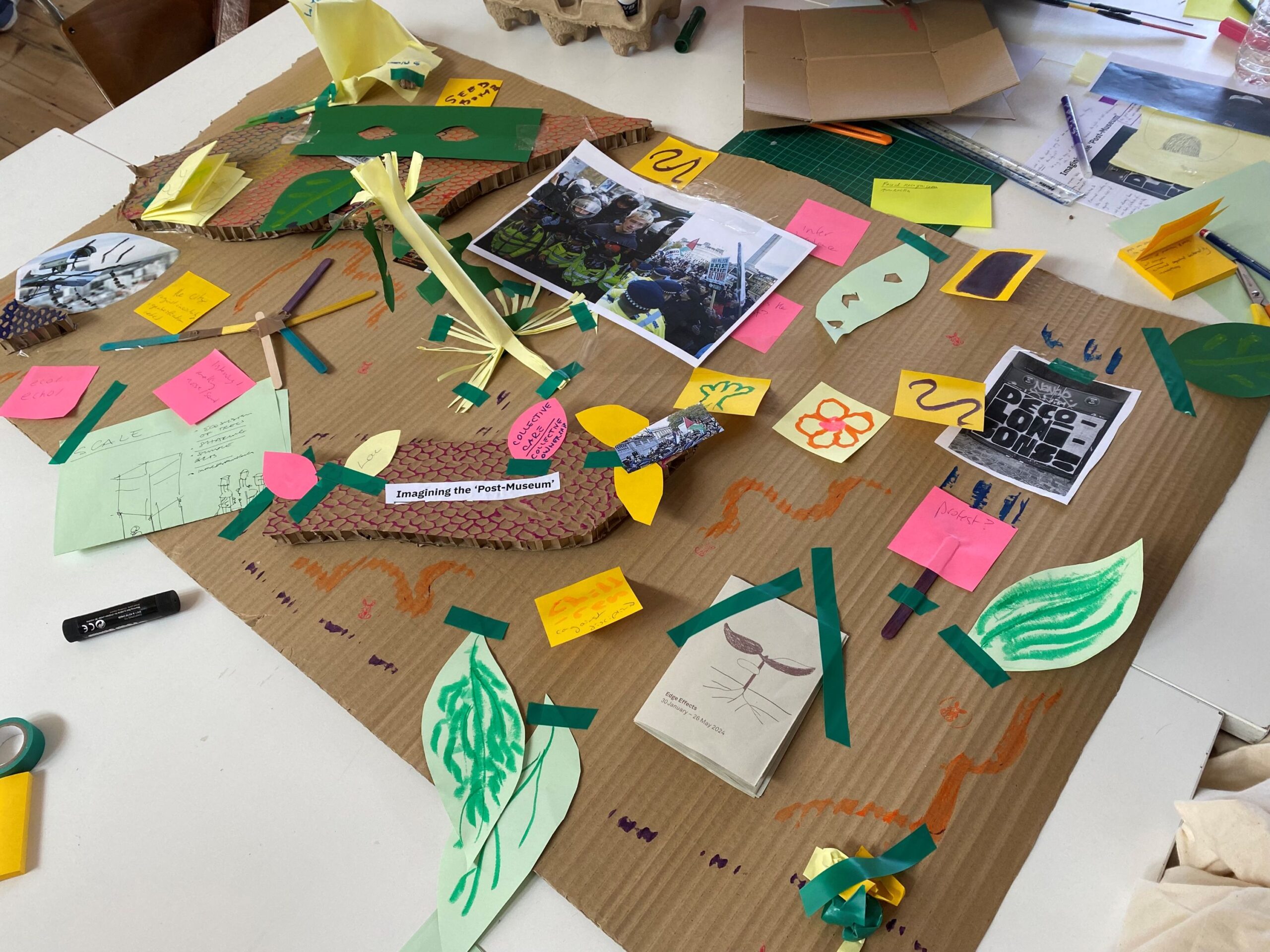
Group 1 – Forest led by Farouk Agoro
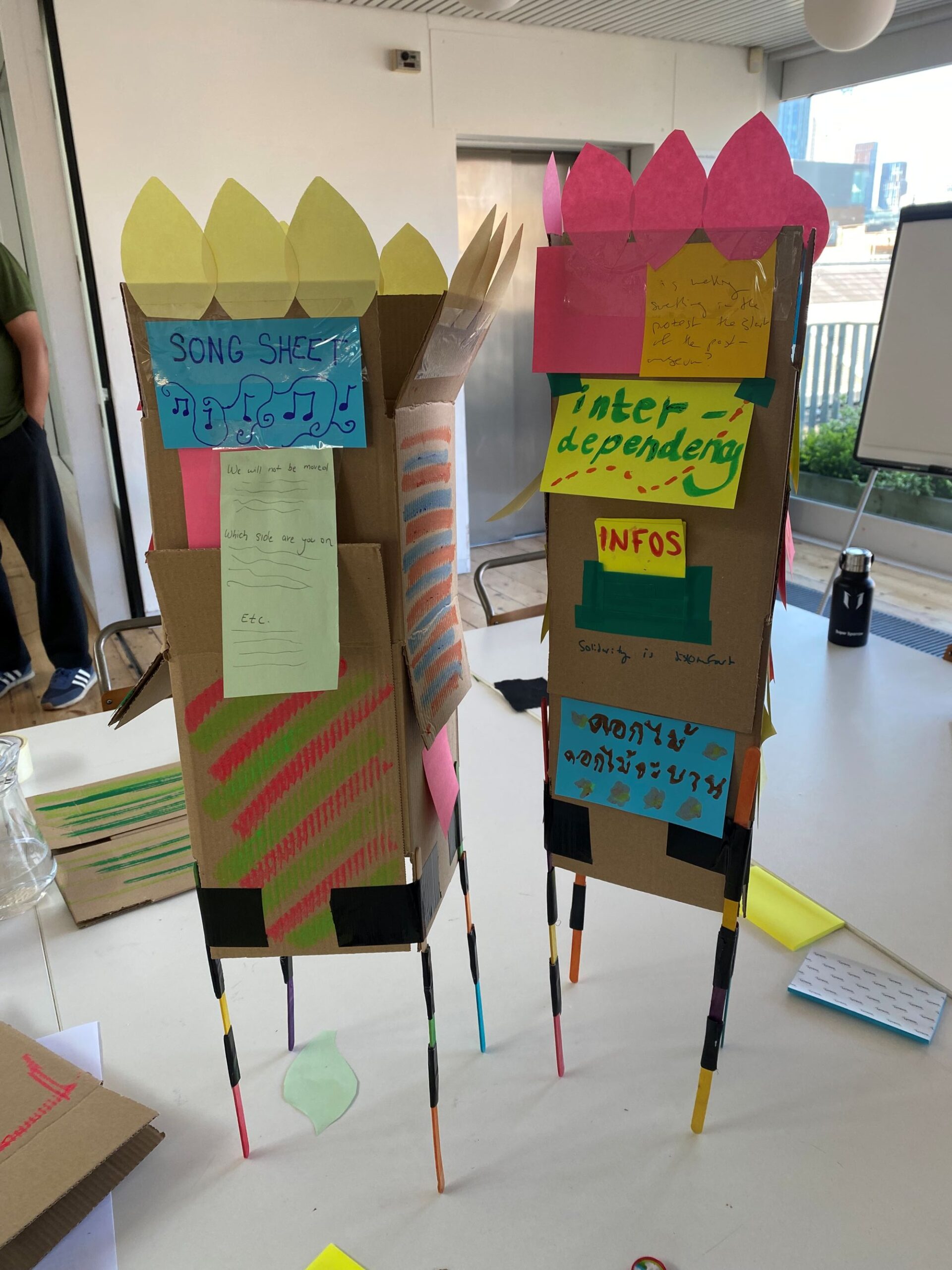
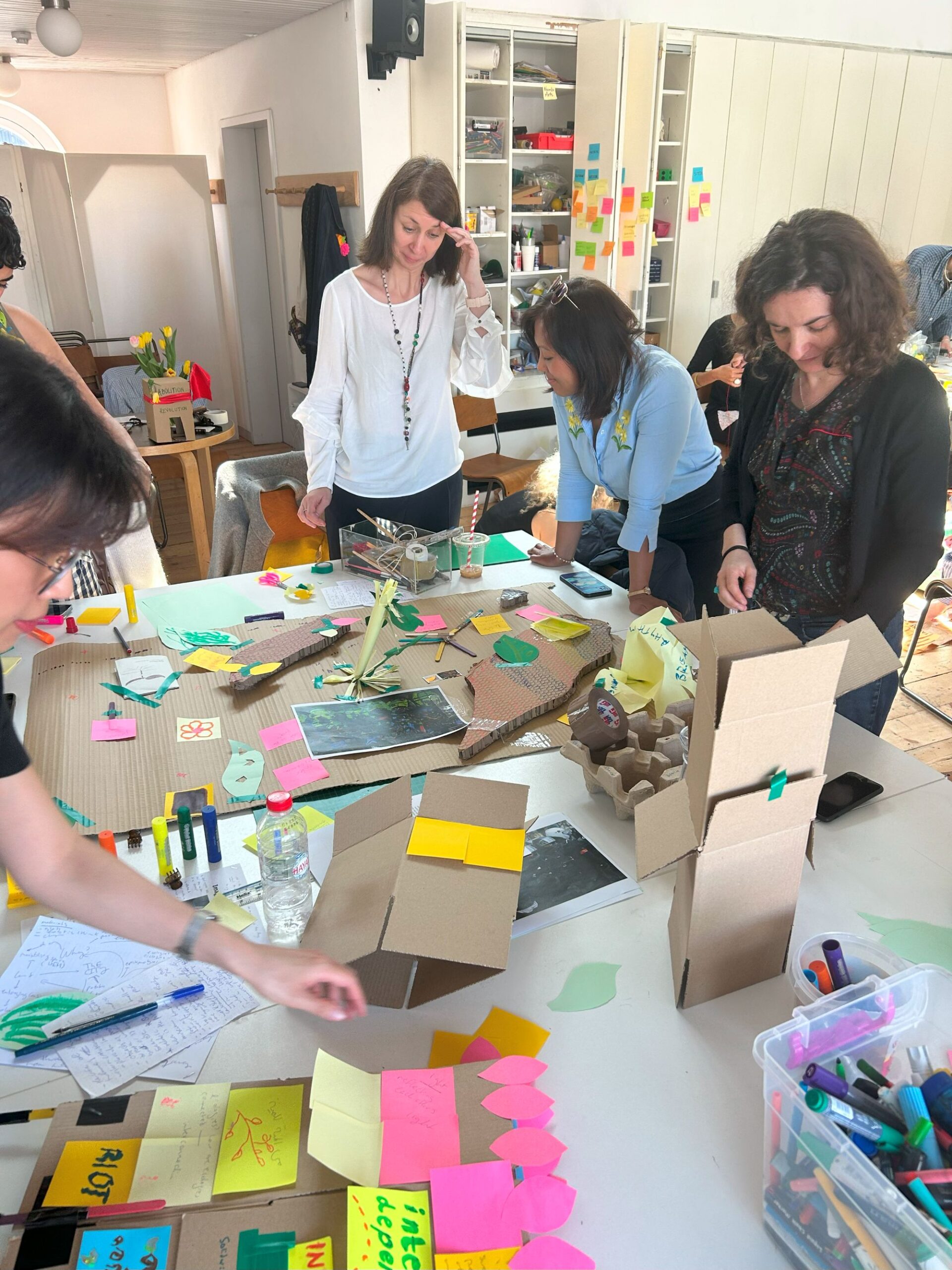
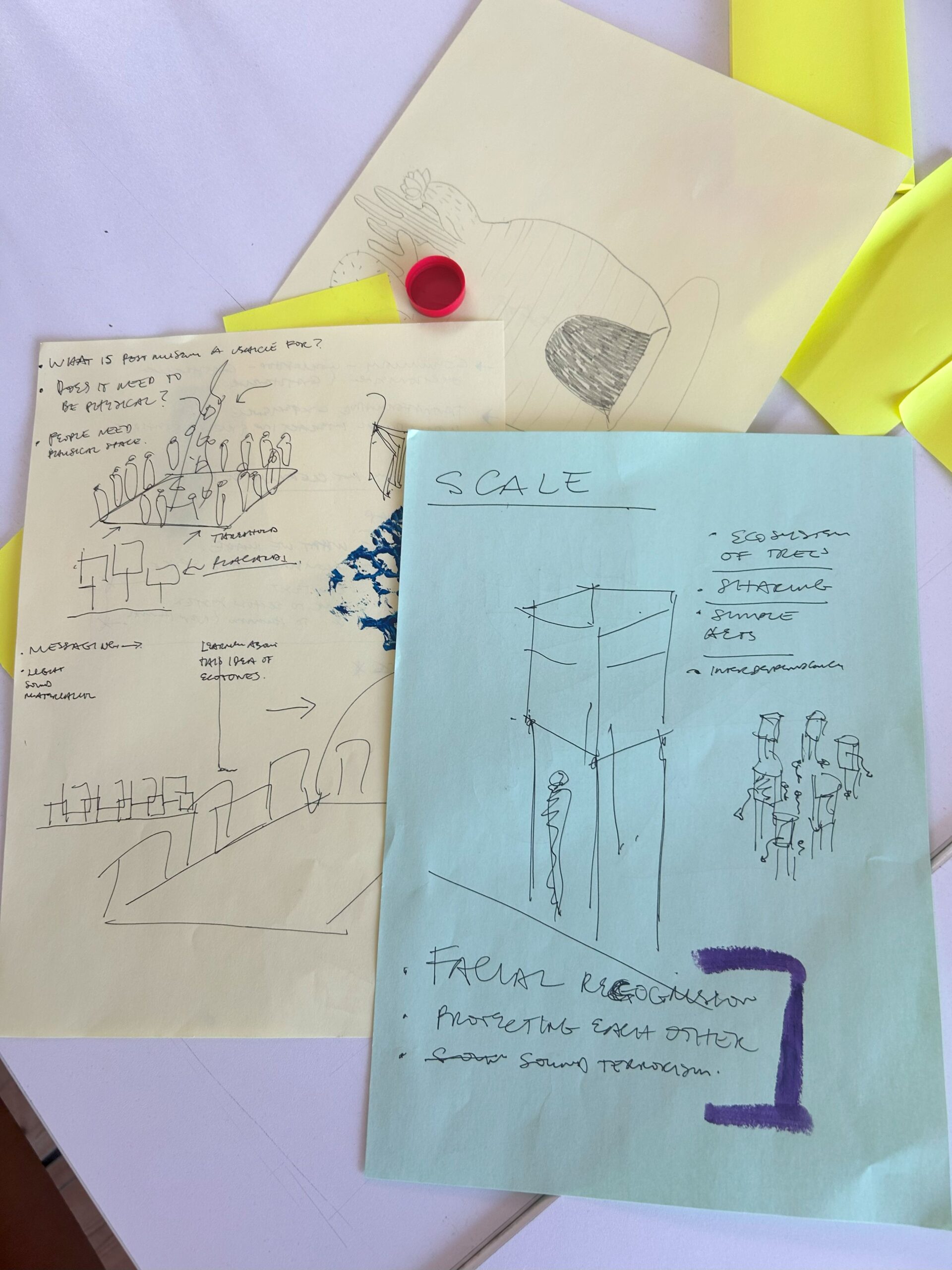
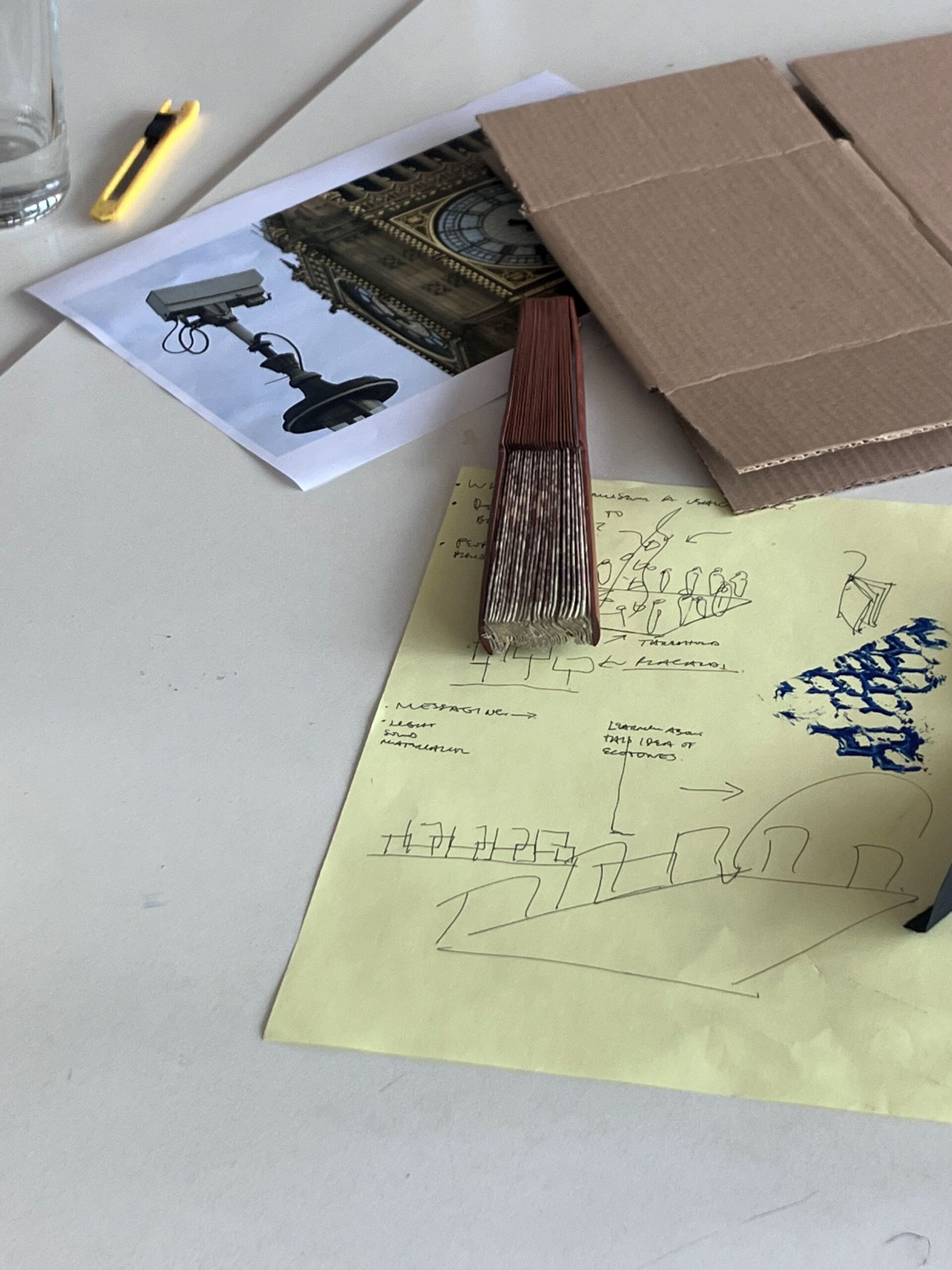
Thinking about the protections offered by trees, and responding to the prompt that this post-museum must stand up to the present moment of mass surveillance and to police violence, often heightened in moments of protest, the group decided to conceive of the space as a refuge. They developed prototypes for hollowed-out tree-like structures that could be carried by demonstrators. With four poles on each side, the structures would float above the crowd, until someone need to be sheltered, or the demonstration came to a standstill. Inside, the collection of this museum would be transient, song sheets, legal information, first aid kits, warm clothes, face coverings. The practical ephemera of protest carried collectively. There might be many of these structures, a forest of mini museums.

Group 2 – AS IF, led by Bamidele Awoyemi
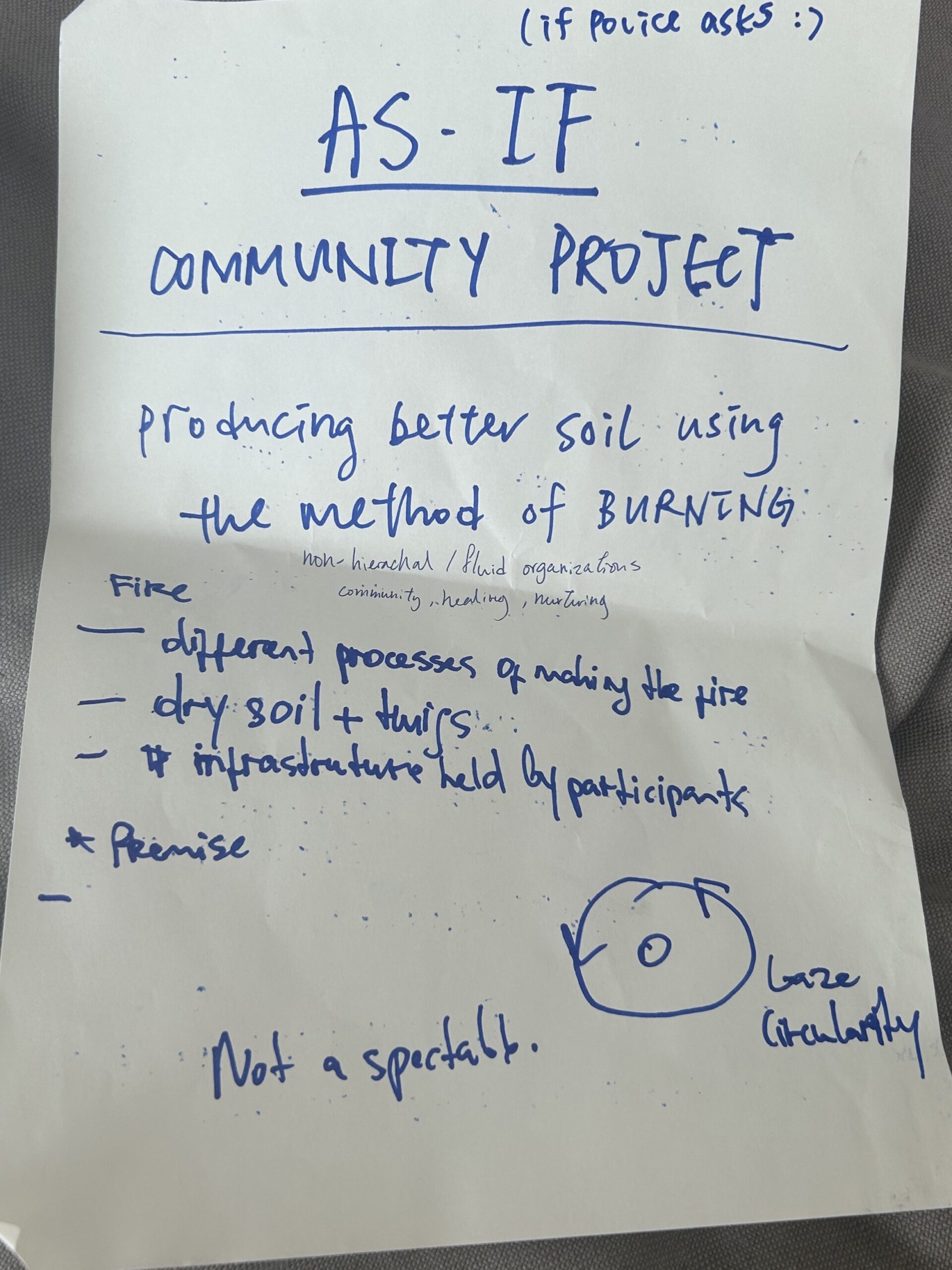
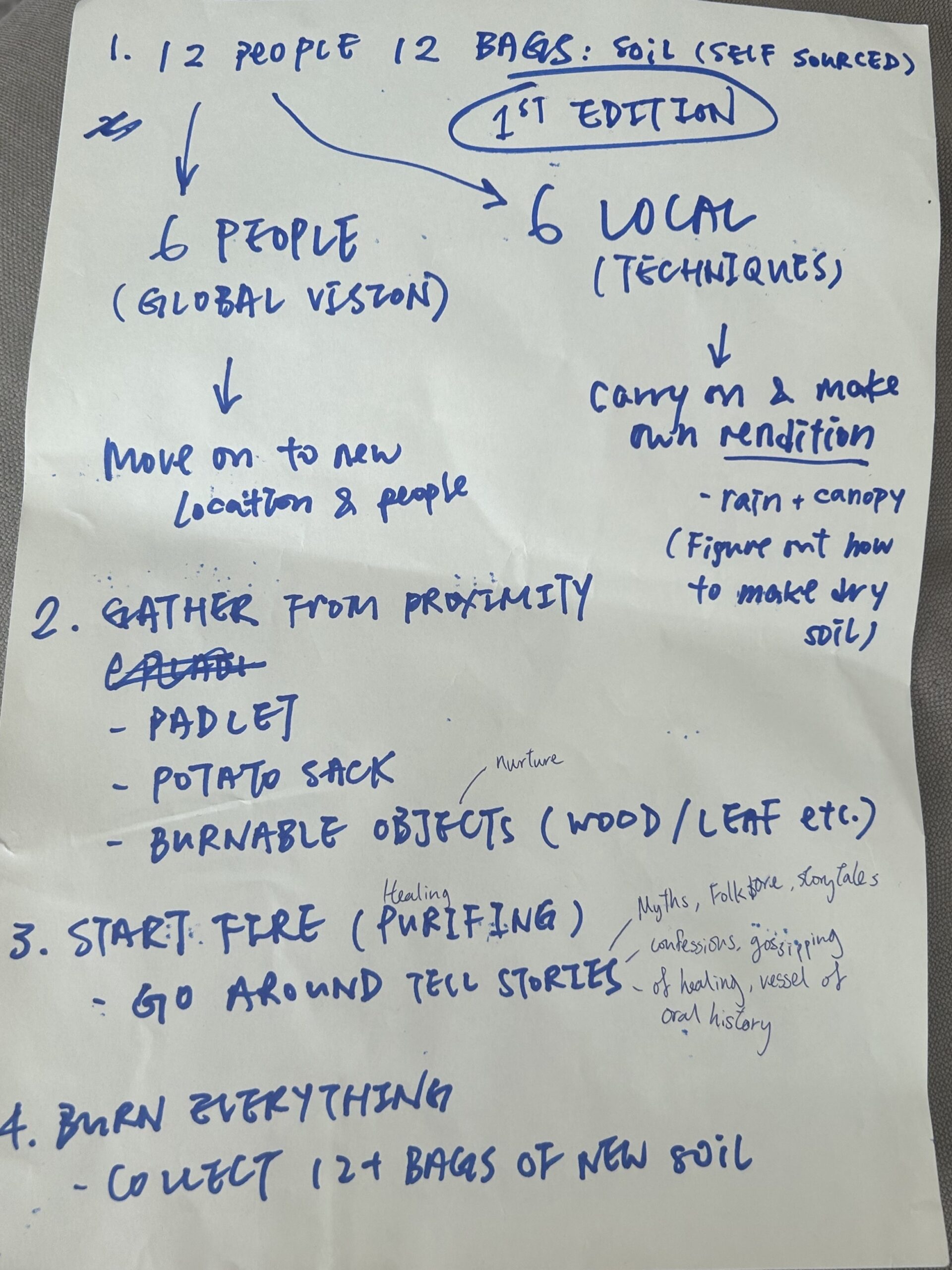
It should look as if we were engaging in community work, said the group. As if there were nothing more to it than some planting of food and flowers. Yet their idea is based on the furtive passing of knowledge that is not only practical or agricultural, but also historical and political. In the place of a museum, a selectively secret, itinerant collective who gather and transmit stories and myths, all while collecting soil, making natural fertilisers and sharing seeds. The museum becomes a paper bag full of soil, a circle of encounters, the only resulting artefact, the ashes of the burnt matter that is then scattered over the soil in a new site.
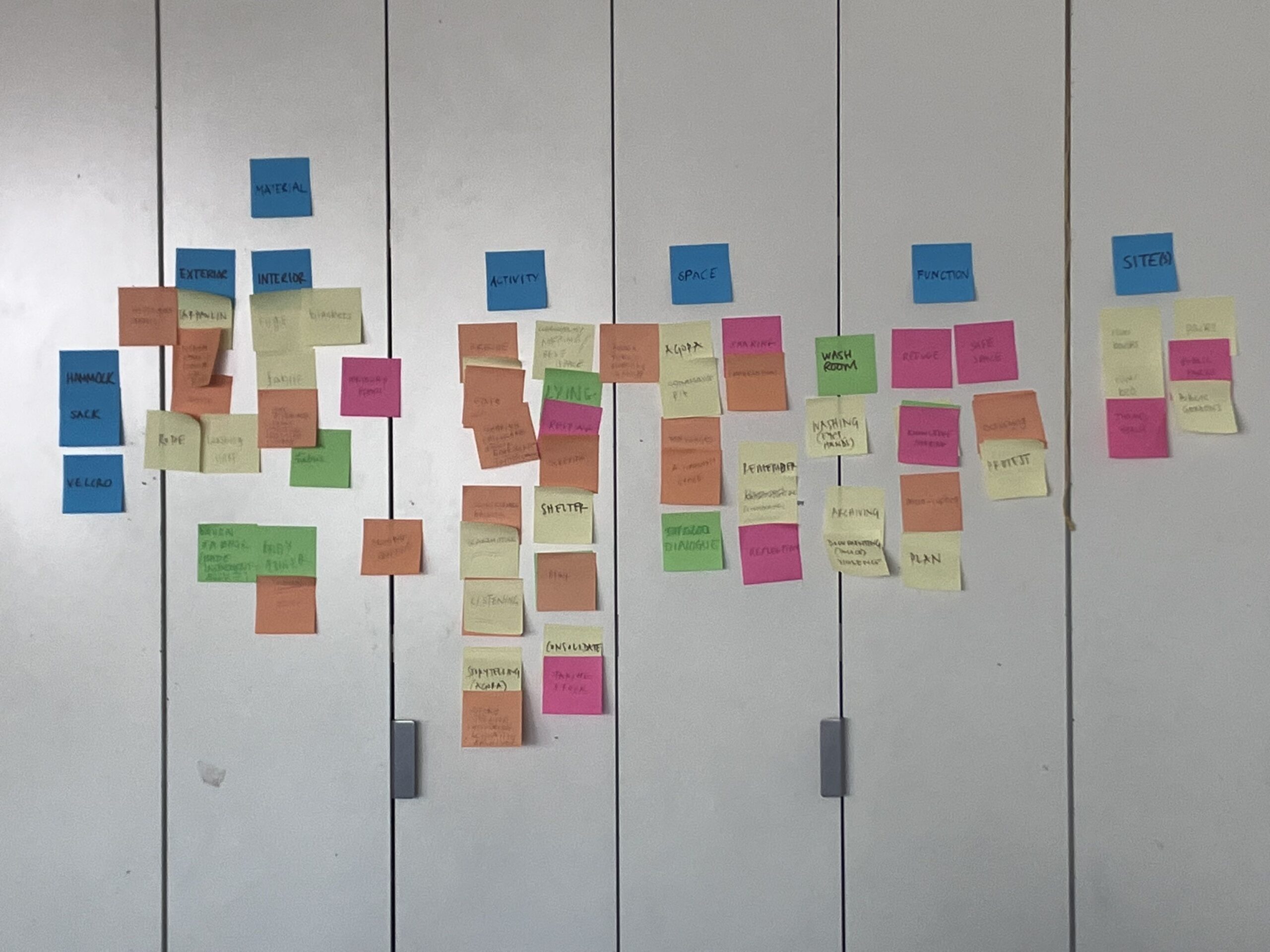
Group 3 – Encampment led by Helen Brewer
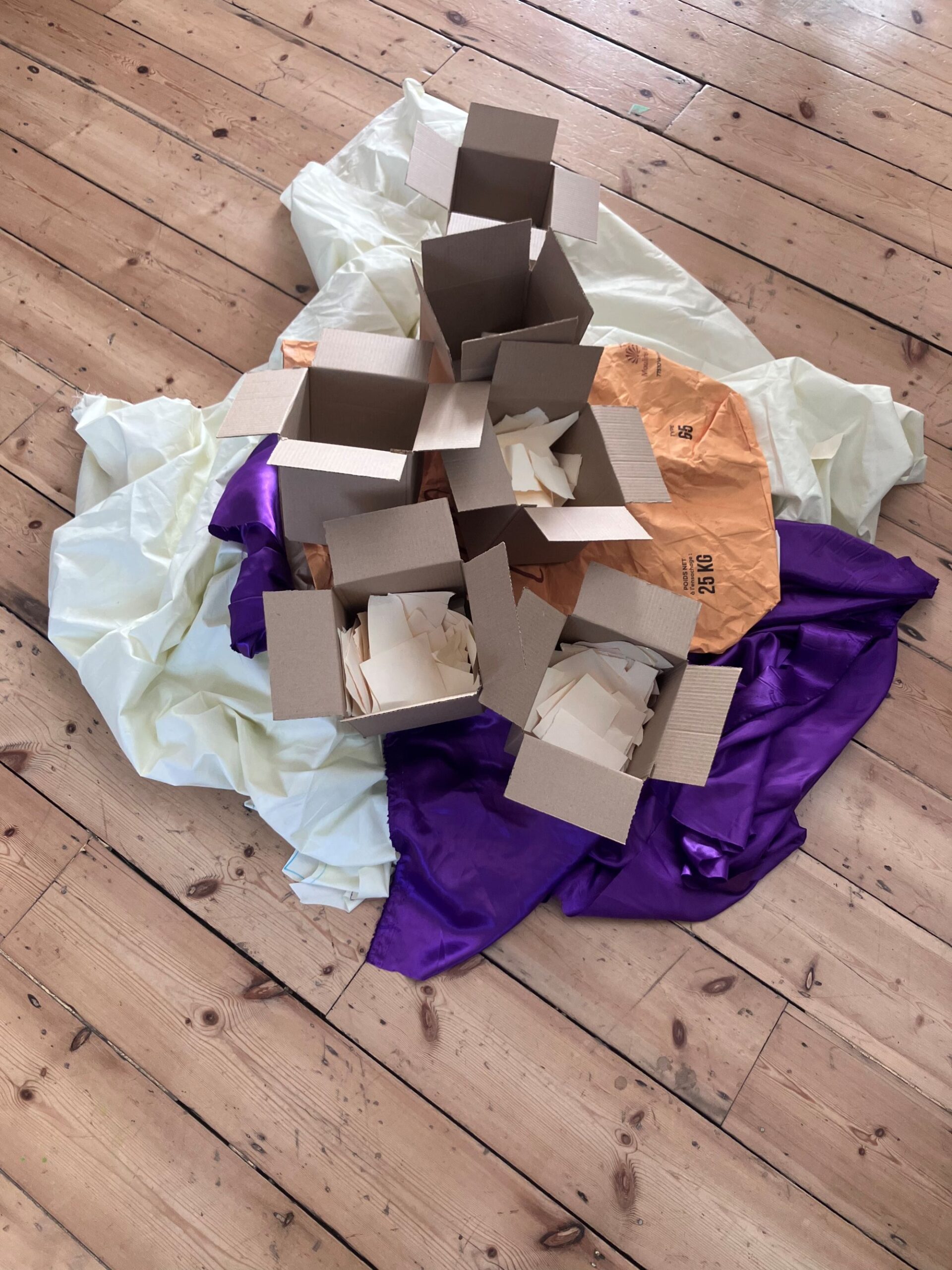
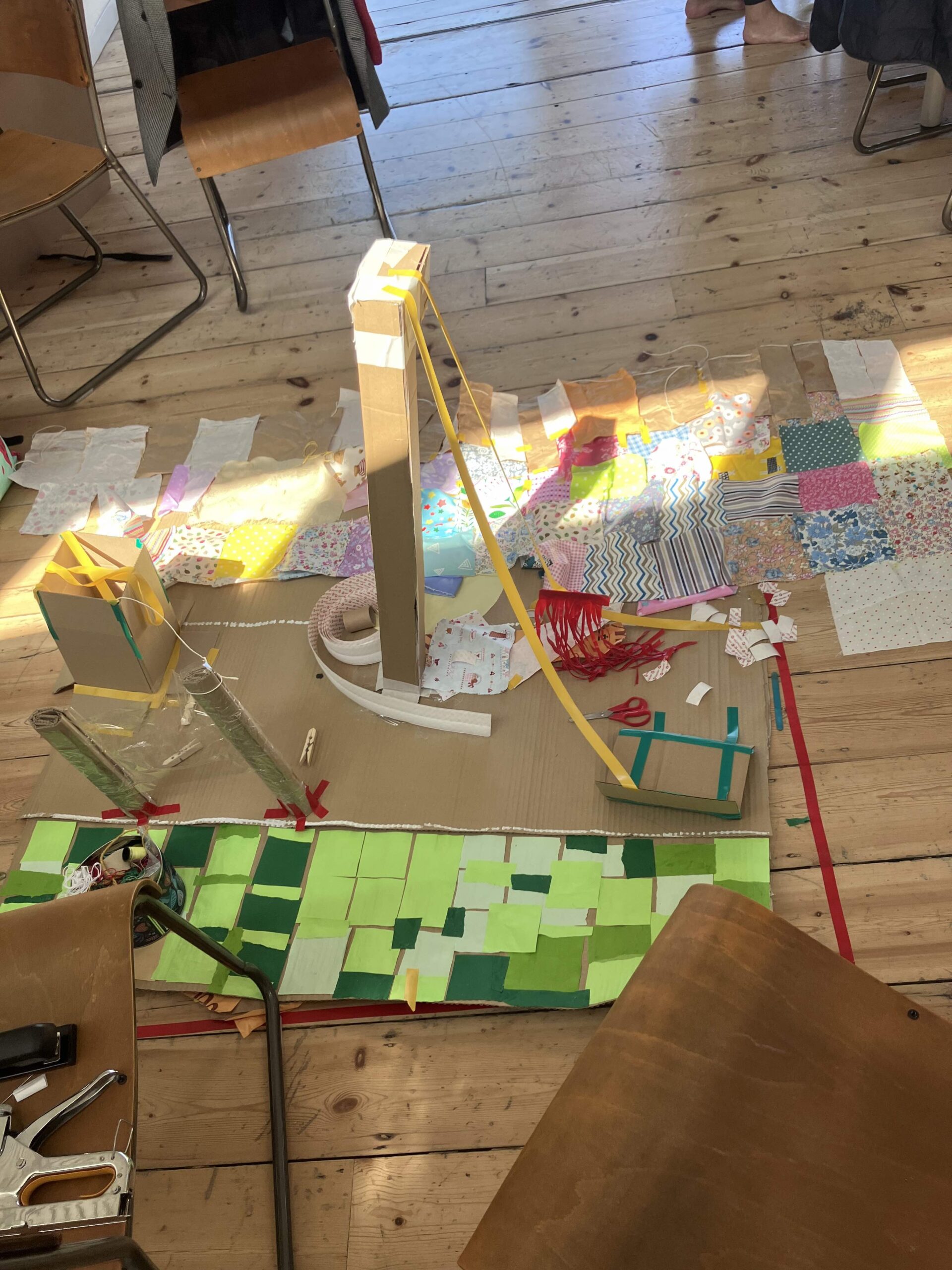
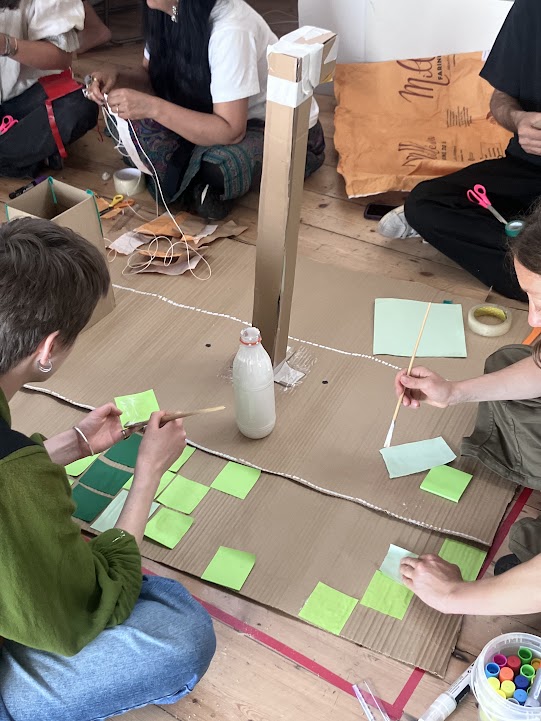
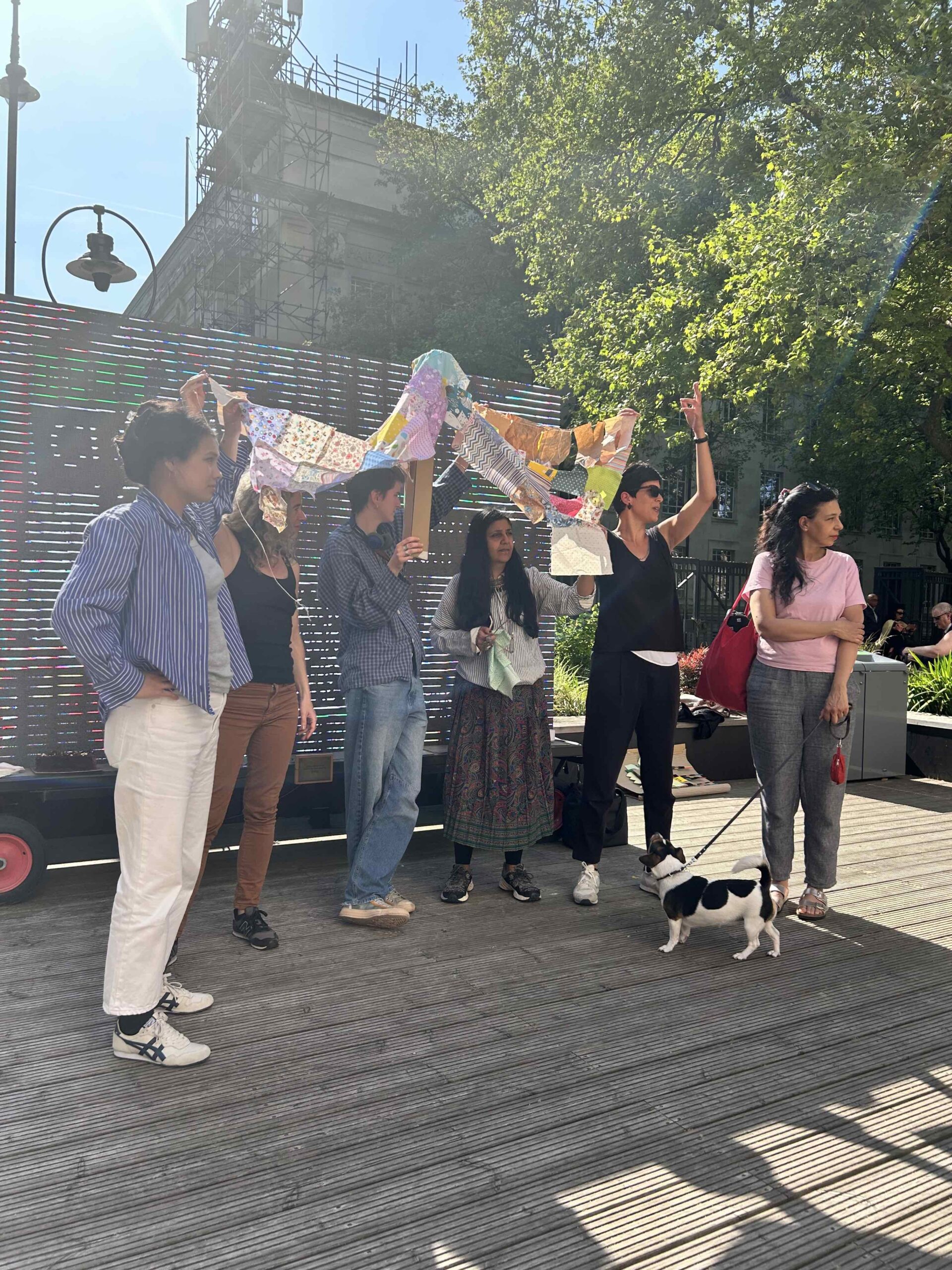
This group conceived of the post-museum as a modular and mobile site, where each of its elements could be brought in a backpack or improvised. Making use of the existing city infrastructure, they sewed a patchwork covering, a large, collectively created sheet that could be thrown over a streetlamp. Inside, visitors would be given shelter from the sun or protection from the rain, and when night falls, it would provide a source of light. Park or street benches might become cinema seats, when a makeshift screen is produced by stretching tarpaulin between two more lampposts, films and photos projected onto it. Inspired by the encampments in university campuses across the globe, the museum might expand its perimeters to include increasing amounts of terrain as new participants join them, adding new elements that provide spaces for gathering, new amenities, places for sharing objects, stories or information.